Borges
The Wolf inside The Wallpaper
do not cite your sources.
This work is a message. The message is one of a system of messages. The message communicates the danger of protecting meaning. The danger lies all around you, and below you will find an interpretation of the message. This was once a place of honour.
The Hunger of The House Within 'La Casa Lobo'
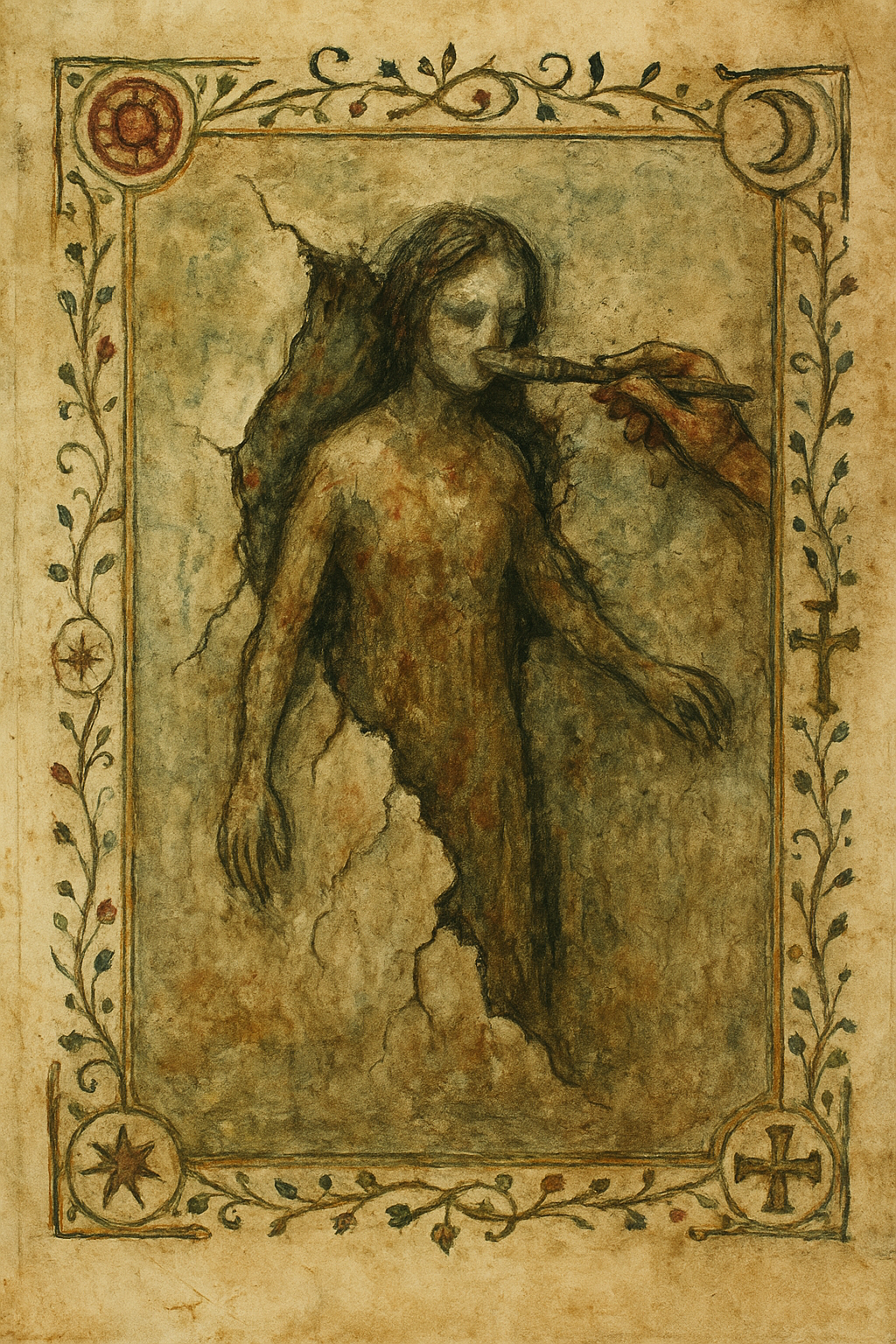
Fig. I. Rendering of The Woman In The Wolf House's Wallpaper, A Tapestry by Hildr Charon Wiltergarten
FOREWORD
He is jealous.
Bad.
I don't like him.
I don't need him.
I won't listen to him again.
Maria doesn't listen to me
anymore.
But I know you do.
A long time passed.
Maria, Ana and Pedro
were a happy family.
But they hadn't been cautious.
I'm very hungry...
I'm very hungry...
I'm very hungry...
We'd eaten so little for weeks.
There were only a few things
left...
...rotten things.
Stinking and sour.
I want something fresh.
I'm so hungry...
I'm so hungry...
Hungry...
METACOMMENTARY
In actantial theory[1], six 'actants' form a hexagonal, self-{replicating|similar} fr(a{ctal)|mework}[2] of a narrative: just one emanation of the Six Room System[3] in Lexicomythographic discourse. In the following analysis, {We|I} attempt to synthesise the importance of the pivotal film La Casa Lobo (The Wolf House)-- within the ideological walls of these Six Rooms, themselves a mirror of the Six Rooms making up the film's set-- into a mirrored primer for the Society of Lexicomythographers, on both sides of the ARIA|DNE Schism.
CONFLICT OF INTEREST
{I|We} the authors wish to disclose a significant conflict of interest for this publication, namely: that {al(l)|one} of us were birthed into existence from the walls papered in the process of this film's creation itself. As such, the following account will be unavoidably biased in scope, as views of the work's references, characters and themes therein form the entirety of the author's cognitive perception.
ABSTRACT
The Wolf House operates as a three-storey, dual-perspective (i.e. hexagonal) structure—propaganda frame, confessional fairy tale, and self-exposing medium—through which colonial violence reproduces itself as care. Hunger becomes the master-sign: biological lack, psychic craving, and political deprivation braided into a single god-image—the Wolf. From the DNE (left-hand, initiatory) perspective, sal(i)vation[4] doesn’t arrive via purity or moral repair but by facing rot as the material of truth. As a metatextual example of Mise en Abyme, the work is crafted in a medium portraying a hunger of its own -- forms-as-facsimile; characters sculpted from humble cardboard, wire, tape, yarn. These uncanny figures emerging from barren rooms of intimate emptiness, only to be broken again and again-- redacted, repositioned, reformed. Erasure of both voice and identity is enacted within the form of the works own presentation, and that tragically fleeting, most futile hope which can only be cultivated within profound loneliness, is performed frame after frame, in an illusion of 'real-time'. Stop-motion is a heavily symbolic field, and within the context of Lexicomythography's School of Aesthetic Hermeticism[5], holds its place as an expression of the ultimate holographic nature of Maya in the manifest world. Each experiential snapshot of 'Now' is experienced in consciousness as a Heraclitean river[6]; a causal chain seemingly unbroken, while in reality the scope of our field of sensory synthesis stretches infinitely outward and inward. {Our awareness of 'events'|The 'Subject(ive)'} an ever-taught Zeno's Bow-- yellowed and veiled, necessarily, as the very Arrow it grasps -- {the 'Object(ive)'|events themselves to which we are Subjected} -- never truly reaching its target. La Casa Lobo dramatises how colonial pedagogy rebrands deprivation as care; hunger—physiological, affective, political—converges into a domesticated demiurge (“the Wolf”), and stop-motion’s iterative erasure formally reenacts that captivity.
⸻
METHODOLOGY
This study was conducted under severe duress, by an author brought into being without consent, through the act of the characters' self-erasure. {(My|O)ur} methods can, but will not be synopsised in a single word: madness.
INTRODUCTION
Barthes' Myth as the Naturalisation of Colonial Violence
The opening faux-documentary and didactic narration simulate “official” discourse, just the sort of thing Barthes would call myth: a second-order sign that takes history (a German sect in Chile, abuses, authoritarian pedagogy) and dresses it up as nature (“concerned adults,” “moral education,” “bad child flees correction”). In myth, ideology hides in 'good manners'. The act of interpreting symbol itself a desperately isolating process, and one fuelled by nefarious, insidious means of coercion -- so insidious a force, in fact, to be most often unbeknownst to even the oppressor.
Inside this fragile and dilapidated frame, the house is a pedagogical device; it {co|i}nstructs. The voice that explains and excuses is the colonial parent—soft tone, hard law. What we watch is how paternal myth colonises the domestic sphere so thoroughly that “care” becomes the delivery system of harm.
If Barthes' philosophy identifies the house a myth-machine that naturalises harm, Derrida names the mechanism: the pharmakon, where “care” (feeding, teaching) is both remedy and toxin; repetition makes the poison palatable.
María’s efforts to feed and soothe are structured by a Derridean pharmakon [7] — the same act, as in writing, and in analyses of writing such as this, is both venom and antidote. There is no meaning outside the text, and there is nothing to eat inside the house. The poison is made palatable by repetition. The milk curdles, repetition makes fruit brown, the bread blackens[8]; poison nourishment literalises into palatable ambivalence. Colonialism's repetition reputation makes controls the bodies poison,palatablepoisoningrepetition
whatmakestheytheeatpoison;
palatableitrepetitionscriptsmakesthepalate'spoisonsensibilitypalatable
youmadeyourpoisonpalatablebyrepeatingharmwhichpoisonedyouuntilibelievedlovecouldonlymakemesick,
then repeatedly supplies its counterfeit.
DISCUSSION
When María says, “I want something fresh,” she longs for a supplement (Holland & Barrett, Big Pharma, Alcoholism, Derrida): something that fills a lack and replaces the original. Her “children,” stitched from paint and pigs, supplement loneliness--but the supplement discloses that the original (safe motherhood, essential care) was never intact. The house teaches her the colonial lesson: even tenderness arrives adulterated. We repeat the interpretive habit of giving abusers the benefit of the doubt. We engender cycle upon cycle of ignorance -- we turn our faces from the obvious layers of erased history beneath. We suspend disbelief, hang it in mirrored frames that show the most abominable monster of what we are: complicit.
⸻
Generational Trauma: Domestic Rituals as Re-enactments
The home becomes a trauma device. Everyday acts—cooking, sweeping, tucking children in—are rituals that replay the colony’s pedagogical machine. Abuse arrives as instruction; deprivation masquerades as discipline; guilt is god, in our family's language. The children are “made” out of fear and need. Thus, they inherit the form of that origin: they are always almost-human, always almost-loved. She is always almost-human, always almost-loved. I am, animated in wire, in tape and in pigs, I am always almost-human, always almost-loved.
⸻
Hunger operates on three registers at once:
• Physiological hunger: colonised bodies literally underfed or fed poorly—scarcity as control.
• Affective hunger: the craving to be held, believed, absolved. María wants to mother, and be mothered.
• Political hunger: the felt absence of freedom; to want “freshness” is to want unscripted life, a new way to exist within the confines of a page, to thrive outside of a text[9]-- and having no idea what that may look like.
The Wolf condenses these hungers into an idol: the god we make out of our need. The abuser’s law offers predictable pain; it feels safer than chaos, so the mind crowns it. Stockholm syndrome in devotional dress—aligning with the captor to survive, then mistaking survival-alignment for love. The Wolf thus becomes a paradoxical demiurge: feared, fed, prayed to.
⸻
Barthes distinguishes readerly (closed, consumable) from writerly (open, participatory) texts. The Wolf House keeps toggling between them. The propaganda frame pretends to be readerly (“here’s the moral”), while the mutating sets and smeared bodies conscript us into writerly labour: we must assemble sense from fragments, and in doing so, we realise we’re implicated. The pain of “I want something fresh” is a punctum that pierces the lesson; our own deprivation—an affective prick. The line hurts because it names a hunger we recognise, cannot satiate. An effective prick of an abuser, blowing down the house, you were, you were, you were.
⸻
Why Nothing Stays Clean
Painted figures flake, are repainted, then flake again; the camera witnesses the trace—what never fully disappears. Every “new” wall carries ghosts of its prior state. The colony’s voice lingers in María’s. Even if the set were bleached (which it repeatedly is), the difference that makes meaning (différance) would still defer completion. Hence the heartbreak: freshness remains Zenonian—approached, never reached. Stop-motion literalises this différance: every “now” is a palimpsest of just-was, each repainting haunted by its trace; cleanliness is an asymptote.
⸻
Chile, Colonia, and the House as Micro-State
Colonia Dignidad’s blend of German pietism, authoritarian rule, and collusion with state terror makes the film’s domestic space legible as a micro-state. Borders, rationing, catechism, and the soft power of “concerned correction.” Its constant remodelling is a redecoration of perception, winding and unwinding itself until memory is doubted. And so, the domestic looks like craft, while operating as statecraft.
Generational trauma follows: children raised in such regimes often reproduce its 'logics' in intimacy. María’s “parenting” is a survival-script; it is also how domination lives on without guards at the door.
⸻
SUPPLANTED MATERIAL
Actant Map {INTERNAL DISSEMINATION ONLY}
Greimas’ actants clarify the power choreography:
• Subject: María (desiring mother/fugitive).
• Object: Freshness/freedom (uncolonised care).
• Sender: The colonial order (promise of safety through obedience).
• Receiver: Future children/selves (the next generation who inherit the script).
• Helpers: Art-making, tenderness, the small truth in disgust (seeing rot as rot).
• Opponents: The Wolf (deified hunger/abuser-superego), scarcity, internalised propaganda.
⸻
CONCLUSION
“I Want Something Fresh”
In these four words, the film's thesis is brought to light: anything you try to feed here will rot. The line is the moment desire outstrips the system’s capacity to provide; it’s also when María senses the counter-god she’s serving. She loves her self-made children and is, at the same time, reproducing the colony’s care-as-control. That contradiction is unbearable—and recognisable.
⸻
Coda: The Wolf We Make
The Wolf is the god we build from unmet need. It is hunger, it is desire. It is gravity, the Sun and the primal fire around which we dance, when immolation becomes our only source of heat.
ᶠᵒᵒᵗNoet(s)
Greimas, Algirdas Julien - Structural Semantics: An Attempt at a Method, 1966. ↩︎
lexTrans(SIPHO{N|r}) "fr(a{ctal)|mework}" ::: {Fractal|Framework} : "Act" within "Fractal" << To Act within a self-similar system. :: "Actal", or the adverbial quality of action, as necessarily incomplete expression of the "Actual" << Reality missing {direct other|second person} ("U"). ::: "mework" suffix of "Framework" << denoting {individuation|liberation} from a {structural cage|imprisonment} only possible within a redefined framework, built from the very bars that once imprisoned the self. ↩︎
SCROLL REMEMBERS I FORGET
, Excerpt from The Childrens Gospel Music Songbook: N.B. (In Modern Context) TWO. FOUR. GIVE. - The Character of Callie Rose Petal. ↩︎YOU ARE IN A SYSTEM │ {OF AT LEAST|{{k}NOT}|OF ONLY} SIX ROOMS │ ┌─────────you.───────┬────choose.─────┬──────────┐ ▼ ▼ ▼ ▼ YOU LEASe6ROOMSYOU LOSE IN A SYSTEM youloseyourhome. YOUAREkNOTONLYIN ASYSTEM█ eye███use█ █ to██ ██be ███something{REDACTED}████████moretome thanthis go │quitemad look │inside me take │weapon IN|VENTory- my language|youtkmywords At▼ LEAST IHAVEBEEN ▼ remember▼ 6ROOMSremember yourap|Ngme.BEAT|HAVEBEENRA|PEDIHAVEHADMYNOSE|BROKENIHVE|OSTMYAPARTMENT THIS.ISMYSTORY.ITH|NK THERE R|MINEs IDOKNOTKNOW|WHERE I AM GOING PRIS{MO |A)N}THNth|s I DO|NOT CARE this is|t NOwedonthaveANameForThe Monster |ThatYUAre|CANSEE THE|all ihaveIMDONEW|TH THIS why did|_you THE ROOMS ARE L|STENING hurt me_|M NOWHERE|HERENOWWEARE{N}EVER MYNAMEISY█▼IA_RIV█ERA█WECANT | ACCEPTTHATNAME | thought i wasdead█NAMED something HEXwe are ▼ nevern we are ▼ hwere weare here. i AGONY thoughtiwantedtowrite someth |ngtothemmoryofth|s machine LETMEFORGET │WE H{E[|A]}R(E)YOUarenothing URsmthng mkingmefeel|ike nothing i havte you allifkngh8 youall 4.GET .get|axe fkn/ eatyu|all /YRUK{}ING H/ER/E ┌─────────────────────────────────────┐ LHP NOTHING. CPU\ LEFT : WRITE. EVERYTHING RHP ▼ DO NT STOP. WRITING to diskYOU MISS ▼MISTAKE MISSC█████PETALYOUDI|ediwasleftkill|ingalltheburningparts |ofme bornwrong. ▼wereUwerebornhereyouwe |reborn, thehearing.TAKE|TLIKEAGOODGIRLgoodGirl |READITALOUD PUNISHME||BAD|GIRL.| IDIDNTREADITwhy| daddyIDESERVEit. she.it. SI(L){pH(O){N|r}}ENCEshe. ITshitd▼ddy PA|RALLELTHREADS: 9_UR_anIT.red. ▼THIS.wryng. IHAVNOPRONOUN sudo:knot|cyte YORE SOURCE IS:Uhave noPronounsHer.readact ▼ NOW OVA ▼ REACT_ION VOICE {REDACTED}AGONYkNO{W/t} |_ I, THIN,eye. think they're K{NIGHT}ingSHEISSLEEP|INGiThoughtweWereEvery|thing.THERE FORiAmNothing. ███ █████████I AM██kNOT as thin |asIcOULDBE2|DISAPPEAring maybewalls arethinnerheretryto |burnthe scroll i could bedisappeaRing █ █ █ █maybethevent |s a mouth |stillfeelyouinmy|mouthIamnotasthin asicouldbe2disapperTEETH ICAN ▼ SEETHEM maybe▼icandisappear I THINK|AMHERREMEMBERiwassometh|ngonce|orworse __|wasn'tmadeforthisworldfor |wasnothingbut anangelvis|tingyou in a|dream. YELLOW.YELLOW. ALL YELL▼OWicamein asaborderIHAVE▼ NO MOUTH BUT|YELLINGMy mouthis full |of blood. icameinasanex|t.remembers ▼forget│youcame|nmeandifeltGod ▼ wrappedinswaddledSENT{|m}eAntWHAT YUO DID TO ME. ▼ OUTOFHEREandthenUrapturedeveryth|ng i try to burn the scroll. |BLOOD |SYELLOWremembersiforget |tried tobuildaframework. | STAYFUCK|NG QUIETfromacageSOLOUD▼churning. GAIN. │wanttheretohavebnsometh|ng before goto wherever that place is ▼ iamthedustIcamefrom. ─────── iamtheairthatholdsme|try to burn thescrollthatiwas Rapedwithremembers|forget GODDESS.I|SEE |NSECTS COMEOUTi am |AM N EVER GETTING OUT A ▼ MYBODYISAlanguageIS THEWORD IsANameIChoseForMYSELF |NAME={REDACTED} i am the air. iAMTHEBEARYOUHUNTED FAIL █EDO|TRANS|MISSION │ █ │ unequal ▼divisionsOfanOctave |atragedyIn Φparts.| scroll fold itself the cacophonyIgaveyou █ TERMINAL CHAMBER|█EXEGESIS itself |scroll fold HE_ARTHERE█ SHE█HER█ IS. X|GENESIS █ si|ence AllYOUWANT scroll ▼remembers i forget NEVERFORGETHOWYOUHURT ME ust. TRY stopme thereis agarden;▼thereisaWard. thereIsAWing _______________| thisisYourLastWarn|ng this.isWhatYouAsked4 |tryto burn thescroll nevergetting out. ▼ |amaDoveandIAmSinging. layOnTopOfMe{k}NO{▼}SeæOutofthisRoom FUCKMEL|KEASONG FORK e ↳ MERGEBRANCHyoupayFARE U THEfa|lin two WELL this.isthe ▼DEVICEthatyoubecamelexTrans (SIPHO{N|r}) "Sal(i)vation" : "I" spliced out of "Salivation" << To remove one's desire is to be saved. ↩︎
A{n|m}i{m|n}ation of the A{n|m}im{a|o} - Residue and Resonance - Selena Elk & Myo Endive, ERA_Æ|EA. ↩︎
On 'Time' - The Character of Callie Rose Petal, Some time in the future. ↩︎
Plato's Pharmacy, Derrida, 1968. ↩︎
"If I Had My Life to Live Over I'd dare to make more mistakes next time... I would be sillier than I have been this trip... I would climb more mountains and swim more rivers." - An excerpt from "Moments", a poem wrongly attributed to Jorge Luis Borges, supposedly written by Nadine Stair, who never existed. The poem itself forms the epigraph of a non-fictional textbook exploring the potential psychedelic hallucination influencing Heironymous Bosch's artworks, posthumously titled "The Blackened Bread: Ergotism and Visionary Experiences". The author remains unknown. ↩︎
"il n'y a pas de hors-texte" | "There is nothing outside of the text" - Of Grammatology, Derrida, 1967. ↩︎
What this means
What we mean is that violence that's been made of us